
Our Process
From completing the application to placing your reservation and arranging pick-up, this process guides you through each step of welcoming an Ancestral Acres Birman into your home.
I. Apply
Our application is designed to help us get to know you, your home, and your lifestyle so we can thoughtfully match you with the kitten that is the best fit. We ask about your household, routines, experiences with pets, and preferences because these details guide us in placing each kitten in a home where they will truly thrive. We also include a few screening and scenario based questions that align with our contract to ensure prospective owners understand and are prepared to meet the standards of responsible Birman care.
This process helps us build trust with the individuals and families our kittens will join. We pour a great deal of care and attention into raising each kitten. Their well-being extends beyond physical health to their hearts and happiness. It also allows us to feel confident that every kitten will go to a home where they will be cherished and loved for their whole life.
Once we’ve carefully reviewed and approved your application, you will be added to our wait list and notified when it is your turn to choose a kitten.


2. Reserve
We create a google drive folder for each litter. This includes information regarding the kitten's parents (genetic screening and pedigree), photos, and videos of the kitten. Once it is your turn to choose a kitten, you will be added to the litter's google drive where you can view this information.
We will work with you to help match you to a kitten that is an excellent fit for you and your lifestyle. When you fill out our application, please take your time and provide thoughtful responses as this is truly integral to the process.
Once a specific kitten is chosen, we require a non-refundable deposit of $500. This is necessary to reserve your chosen kitten and guarantees that we will hold the kitten until the agreed upon pickup date. This amount goes towards the total cost of the kitten. Please note that if you cancel the reservation for any reason, the deposit will not be returned. We will sign and return the deposit agreement upon receipt of the deposit.

3. Pickup
The next step is to schedule a pickup date and time. When you come to collect your kitten, we will sign the contract of sale together. This outlines our commitments to you, as well as your promises regarding the care and future of your kitten. At that time, the remaining balance will also be due.
We allow our kittens to go home at 16 weeks of age. By this time, they are fully weaned, litter box trained, and have received routine deworming and both rounds of the FVRCP (Feline Viral Rhinotracheitis, Calicivirus, Panleukopenia) vaccinations. Kittens are not spayed or neutered and have not received their rabies vaccination. Our contract requires that you provide documented proof of spay or neuter, at which time we will provide the kitten’s pedigree.
We strongly recommend waiting until at least 8 months of age to alter your kitten. Birmans are a slow-maturing breed, and allowing adequate time for hormonal and physical development supports long-term health and stable temperament. Altering too early can interfere with this process. While spay/neuter is a routine and generally safe procedure, waiting until the cat is older reduces stress and ensures a quicker recovery. When available, we encourage laparoscopic spay, as it is minimally invasive and allows for even faster healing.
We follow breed-specific practices and do not vaccinate our kittens for rabies at a very young age, as their immune systems are especially sensitive during early development. We recommend waiting as long as your local or state regulations allow before administering this vaccine. This gives their immune system time to mature while minimizing unnecessary inflammatory stress, helping ensure your kitten leaves us healthy, strong, and ready for their new home.
We are located near Bangor, Maine, and all kittens must be picked up in person. While you will need to arrange your own travel, some families have successfully used flights with pet escorts. If it’s helpful, we are happy to meet you at Bangor International Airport (BGR), though we are not able to offer this service at other airports.
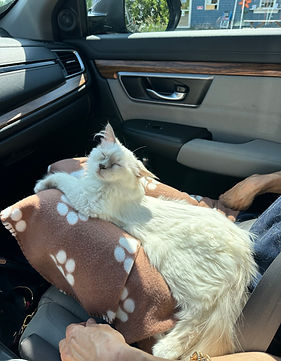
For the trip home, we recommend bringing a comfortable carrier with a blanket and some toys. A few hours before pickup, we withhold food and water to help your kitten travel comfortably. For longer trips, we suggest bringing a litter pan, treats, and water so your kitten has everything it might need along the way. If you are driving alone, please keep your kitten safely in the carrier for the entire trip. Otherwise, your kitten will be happiest sitting in someone's lap and basking in the sun.
We consistently receive positive feedback about the trip home, as our kittens are very well-adjusted. Many families have traveled long distances by car, including overnight trips with hotel stops. Others have flown with their kittens as far as the west coast, and every journey has gone smoothly. With a little planning, bringing your new kitten home can be a calm, safe, and joyful experience.

4. Adjust
While we raise our Birmans to be confident and adaptable, there are a few things you can do to help them settle into their new home. Each kitten goes home with a small bag of their familiar litter to sprinkle in their new box, helping them recognize it as their bathroom, as well as a blanket that carries familiar scents for comfort and reassurance.
If you have other pets, it’s best to give your kitten their own space for the first few days so they can explore and bond with you at their own pace. Most of our kittens are eager to meet everyone in their new family right away, but your other pet(s) may need more time to adjust. Gradual introductions usually make the transition smoothest for everyone.
After about a week, we recommend visiting your new veterinarian to establish care. We also advise waiting until your Birman is at least 10 months old before neutering or spaying. While this procedure is generally safe, all surgery carries some risks, and Birmans develop more slowly than other breeds. Their hormones continue to fluctuate until 2 to 3 years old, so waiting allows their personality to fully emerge while also reducing surgical risks.
With these simple steps and a calm, welcoming environment, your kitten will quickly settle in and thrive as a confident, happy member of your family.


Health & Happiness
A healthy diet, everyday care, and consistent medical and dental checkups promote a long, healthy, and happy life for your Birman.
Nutrition
Diet plays a critical role in the health and longevity of Birmans. As a breed, they are prone to hypertrophic cardiomyopathy (HCM), and diets high in fat can worsen this risk. Birmans thrive on a diet with high-quality protein and whole grains, not grain byproducts or fillers. We recommend Hill’s Science Diet or Wellness Complete dry kibble, which should be available at all times unless your veterinarian advises otherwise. An excellent way to add more vitamins and minerals is to make home-cooked cat food. This can include boiled and shredded chicken/meat, seafood, and can also include fish oil, eggs, or pumpkin puree. Your kitten will also be accustomed to one tin of wet food per day, served in one or two portions depending on preference. Small treats, such as Greenies or Tiki Cat, can be offered to support dental health and provide occasional variety. Fresh, aerated water should always be available. Together, these practices provide a balanced and varied diet that supports proper growth, long-term health, and overall well-being.
Grooming
Birmans have silky coats without an undercoat, making them less prone to matting than many long‑haired breeds. Weekly brushing keeps the coat smooth and manageable, especially as the ruff and color points develop around one year of age. Regular nail trimming protects your furniture and your cat, and occasional baths help maintain coat health. Establishing a gentle, consistent routine early helps your Birman stay comfortable with grooming and allows you to monitor their skin and coat for any changes.
Healthcare
Birmans have unique health considerations, including sensitivities to vaccines. Annual veterinary exams, routine bloodwork, and FVRCP boosters are essential. Rabies vaccinations should be administered according to local regulations and breed-sensitive timing. Comprehensive dental care every few years, supplemented with brushing or dental treats, prevents secondary health complications. Monitoring weight, appetite, and behavior, along with providing preventive care, helps ensure a long and healthy life.
Socialization & Environment
Birmans are social, affectionate, and curious, thriving on interaction with their human companions while also enjoying independent exploration. They often follow household activities, engaging with you as you go about your day. Providing toys that stimulate mind and body, scratching posts, cat trees, and cozy resting spots encourages play, exploration, and natural behaviors. They particularly enjoy interactive games like feather wands and puzzle toys that challenge their intelligence. Birmans also value calm moments, curling up in your lap or joining you during daily routines, which nurture their emotional well‑being.